
1. Why we started
In Vietnam's gifted high school circuit, competitive programming is largely a solitary grind. To prepare for national informatics olympiads or specialized high school admissions, you spend months alone at your desk, drilling hundreds of dynamic programming and graph problems on Codeforces or VNOI late into the night. It builds discipline, but it can quickly feel sterile and isolating.
A few friends and I started Intellectual Showdown because we wanted competitive programming to feel like an event you actually looked forward to. Instead of silent problem sets and raw point totals, we wanted contests with an unfolding storyline, hidden clues in the test data, live commentary, and an in-person finale where people who had only known each other's online handles finally shared a room.
2. Running a 30-person team as high schoolers
Turning an idea into a recurring contest meant coordinating a 30-person student crew without adult supervision day-to-day. That created real friction fast:
Our problem setters would spend hours arguing over edge cases—debating whether a tricky test case was rigorous enough to block an $O(N \sqrt{N})$ heuristic from passing an $O(N \log N)$ problem. At the same time, our media team was illustrating custom characters and writing plot arcs for each round, and high school teachers were sanity-checking our difficulty curves so the contest genuinely prepped students for official exams.
As president, my job was keeping those moving pieces from flying apart before launch day. I configured our servers, pitched local sponsors like Zim Academy and Summit for prize funding and cloud credits, and arbitrated disputes between problem setters when test deadlines slipped. Unlike school group projects, a competitive programming contest has zero margin for error: if a single problem has an ambiguous constraint or a broken test file, 70 contestants will point it out within three minutes of the clock starting.
3. Weaving lore into algorithms
Traditional contests open with dry mathematical statements: "Given an array of $N$ integers..." We replaced that with an episodic narrative. Each problem in a round was a scene in an unfolding story, with subtle Easter eggs and clues tucked directly into sample test cases and problem descriptions.
The rule was simple: flavor text could never compromise mathematical precision. Constraints ($1 \le N \le 2 \cdot 10^5$), I/O formats, time limits, and memory limits had to remain ironclad so serious contestants wouldn't waste minutes deciphering what the algorithm actually required.
The format resonated. Across 8 online rounds, we drew 60 to 70 active contestants per contest, spanning middle schoolers aiming for gifted high schools to experienced national olympiad medalists testing their speed.
4. Sandboxing the judge and running La Grande Finale
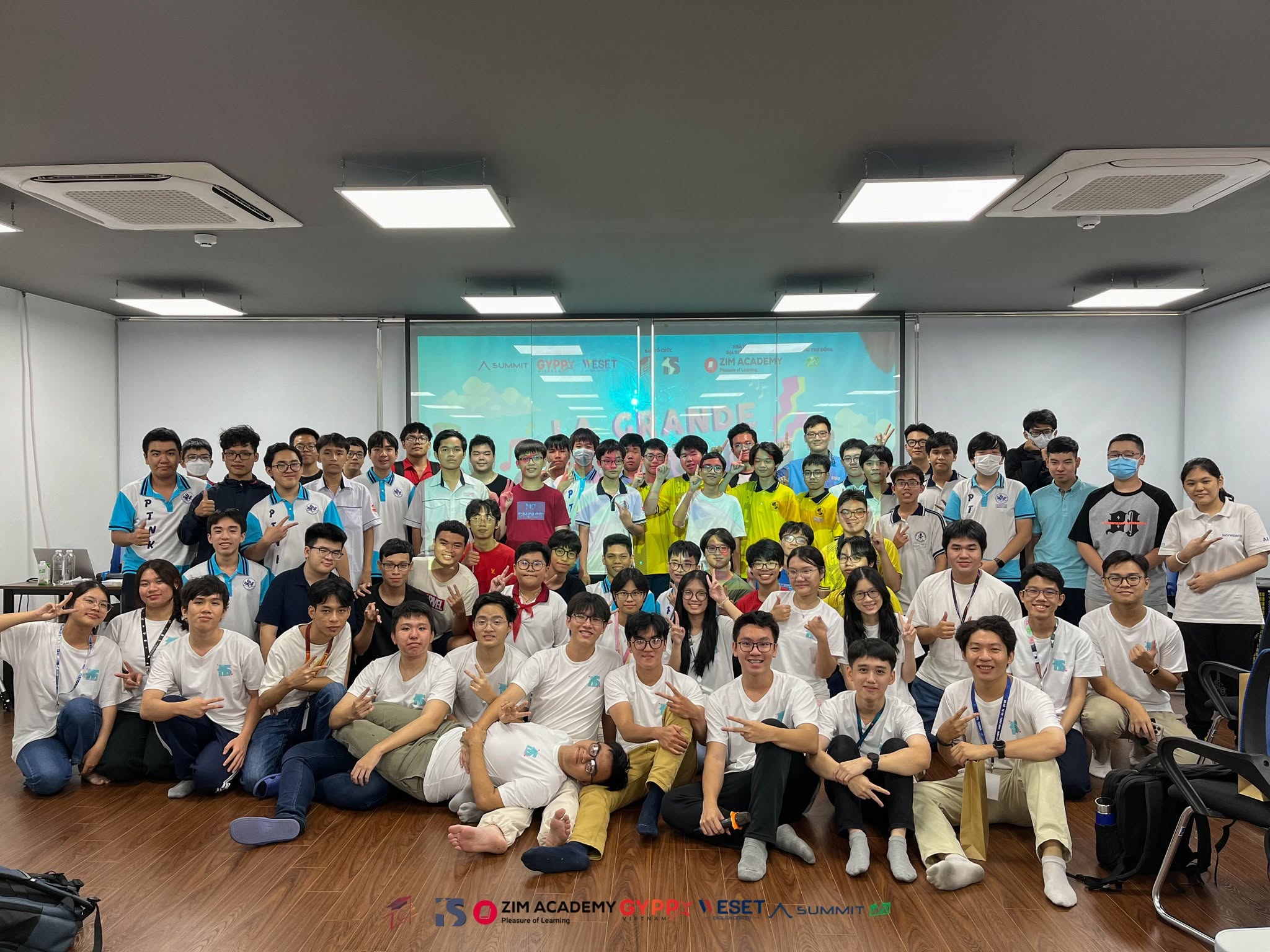
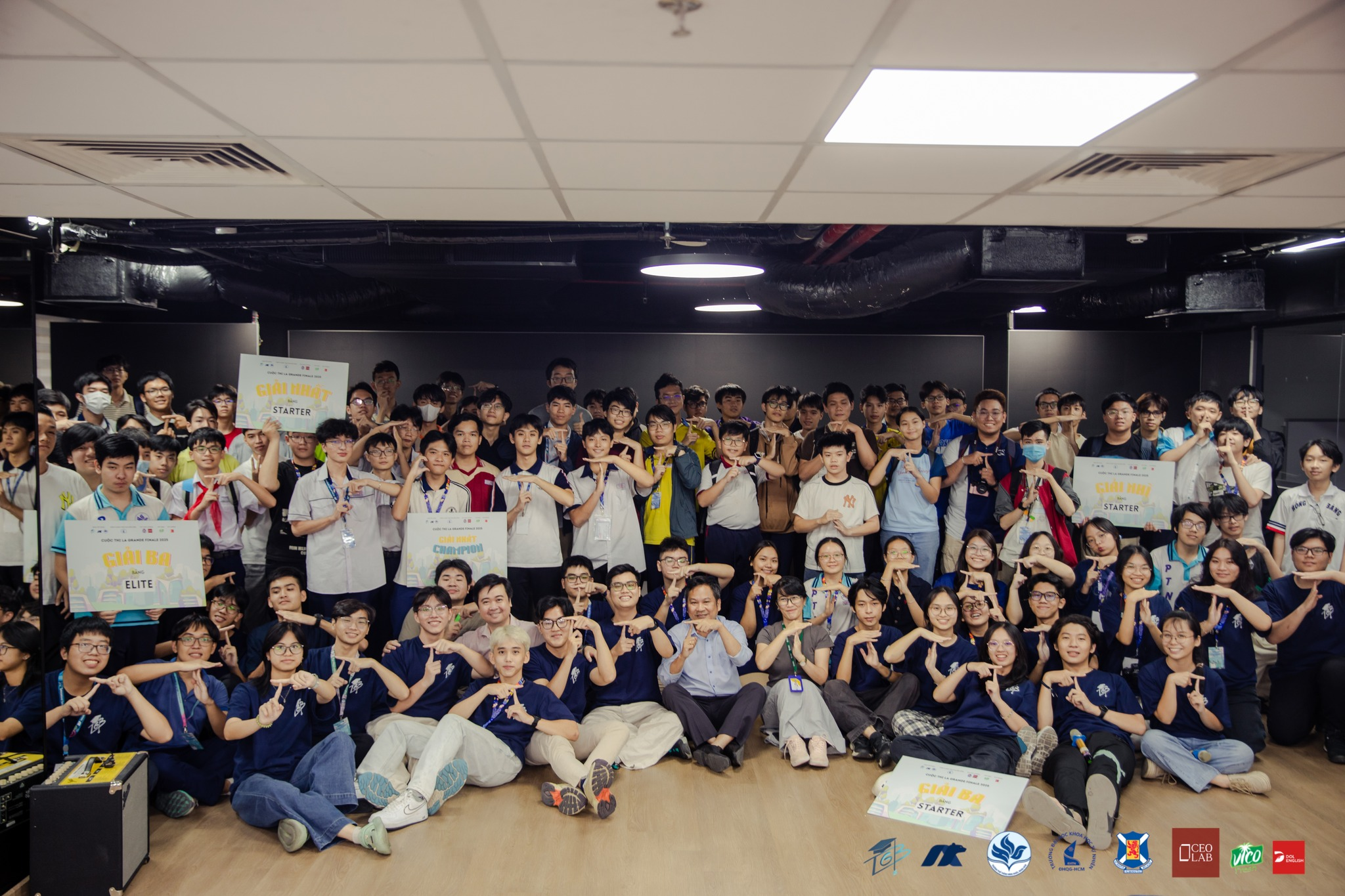
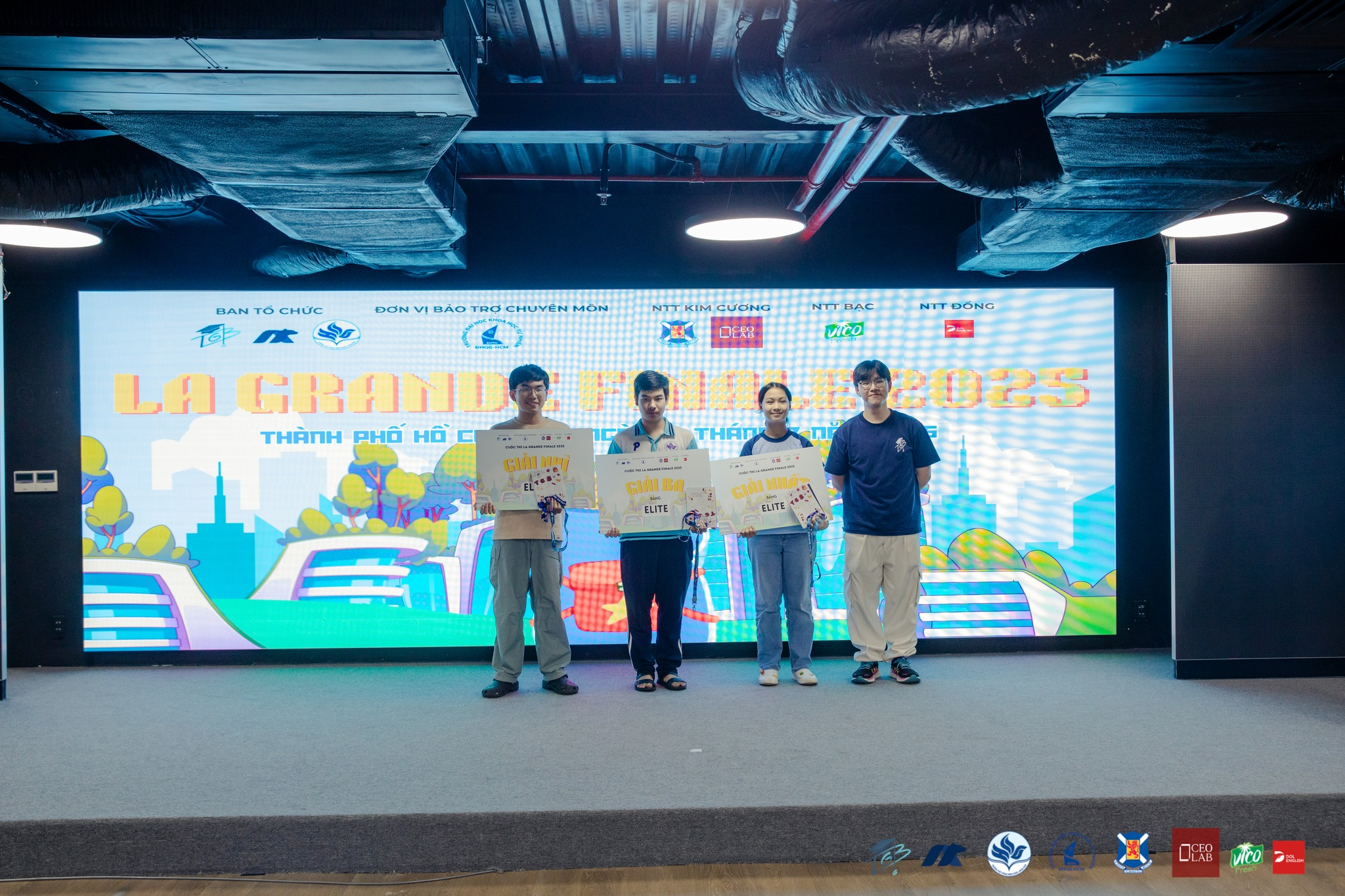
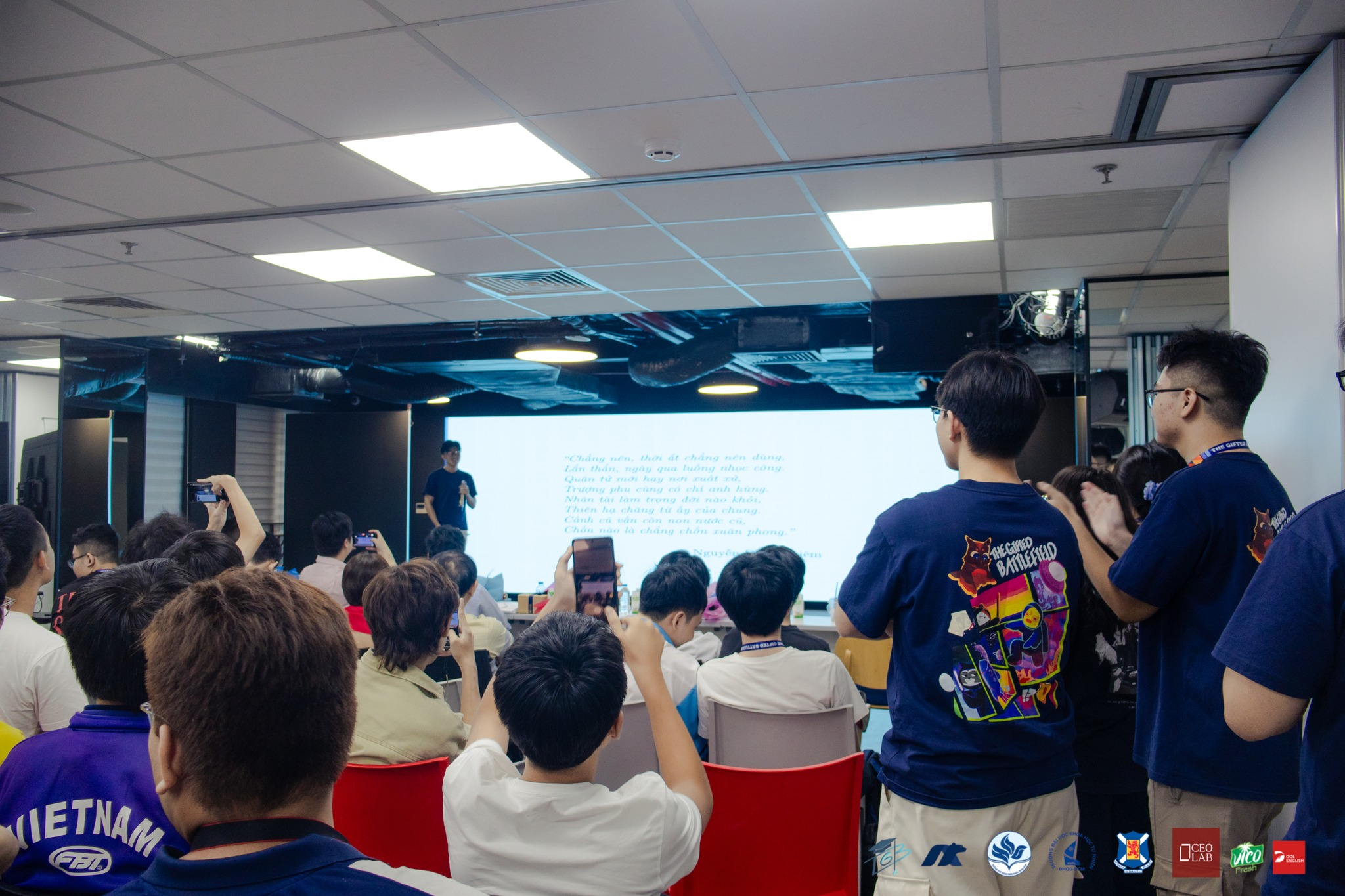
Running online rounds was step one. The real payoff was bringing the community into the same physical space for La Grande Finale, packing nearly 100 finalists into an auditorium in Ho Chi Minh City with live scoreboards, custom shirts, sponsor banners, and stage awards.
Under the surface, the hardest technical challenge was keeping our self-hosted online judge (oj.giftedbat.edu.vn) alive during concurrent submission spikes. When 100 students fire submissions simultaneously in C++, Python, and Java, runaway programs are inevitable—a single unconstrained while-loop in Python or memory leak in C++ can choke CPU cores and stall other evaluations. We isolated submissions using Linux cgroups with strict CPU time caps and 256MB memory ceilings to ensure fair execution.
We built tension during live contests by freezing the public scoreboard in the final 60 minutes, hiding rankings until the stage reveal. As soon as the contest clock hit zero, we launched a post-contest livestream to break down editorial solutions and tricky test cases live with contestants—sessions that pulled in over 7,000 views across the community.
5. What happened after I left
The typical lifecycle of a high school passion project is predictable: the founder graduates, goes off to college, and the project quietly goes dark. I didn't want that.
When I left Vietnam to study Computer Science at UIUC, the best possible outcome happened: the organization didn't skip a beat. Contestants who had sat in the audience during Season 1 stepped up as the next generation of problem setters, judges, and event leads. Former competitors took over the editorial livestreams and wrote harder, more creative problems than we originally did.
Today, Intellectual Showdown has expanded to a 100-member student organization, and La Grande Finale recently completed its third edition with over 100 competitors. Building a platform that outlives your own involvement is the single hardest—and most rewarding—thing I've built so far.